There is no hiding from the truth in this article. I have no magic sugarcoat, nor do I wish to have. I just hope for some, that Nature`s alarm calls are heard. Nature`s alarm calls are ubiquitous, worldwide, national and local.
If you have any affinity to nature (well, of course you have!) then let me start off with a couple of devastating facts. In the South East of the UK there has been a 71% reduction in House Martins since 1995 and a massive 81% reduction in the number of Swifts during the same period. This period also relates to the time that I have been a resident and birder within the Dulwich environs.
It would be interesting to administer a quick reader research survey on the immediate reaction to those figures; I`ve put the reaction into four broad categories:
- So what?
- That`s a shame but there`s loads of Parakeets and Woodpigeons to make up for them.
- Oh dear, accompanied by a wringing of hands and continuing with the washing up.
- Shocking, what I can do?
I have to hope that not many readers have said yes to response one, as to be fair, you`ve read this far and thus must have some engagement with the subject and not switched off – yet.
If the first thought was nearer to the second response, then I can and will argue the toss. Having recorded birds in the Dulwich area since 1990, I can honestly say that not only has there been a decrease in the overall numbers of birds – even taking into account the not so exponential rise in parakeets, but also an alarming decrease in local avian biodiversity; in other words, a decrease in the number and abundance of avian species.
House Martins and Swifts are migratory birds and suffer the consequences of negative human versus avian interactions from Europe to Africa and back again. They are iconic headline grabbers. However my figures suggest that this reduction in the number of birds is across the spectrum of species, including resident and common birds, whether star species or more humdrum, indeed the birds of Dulwich.
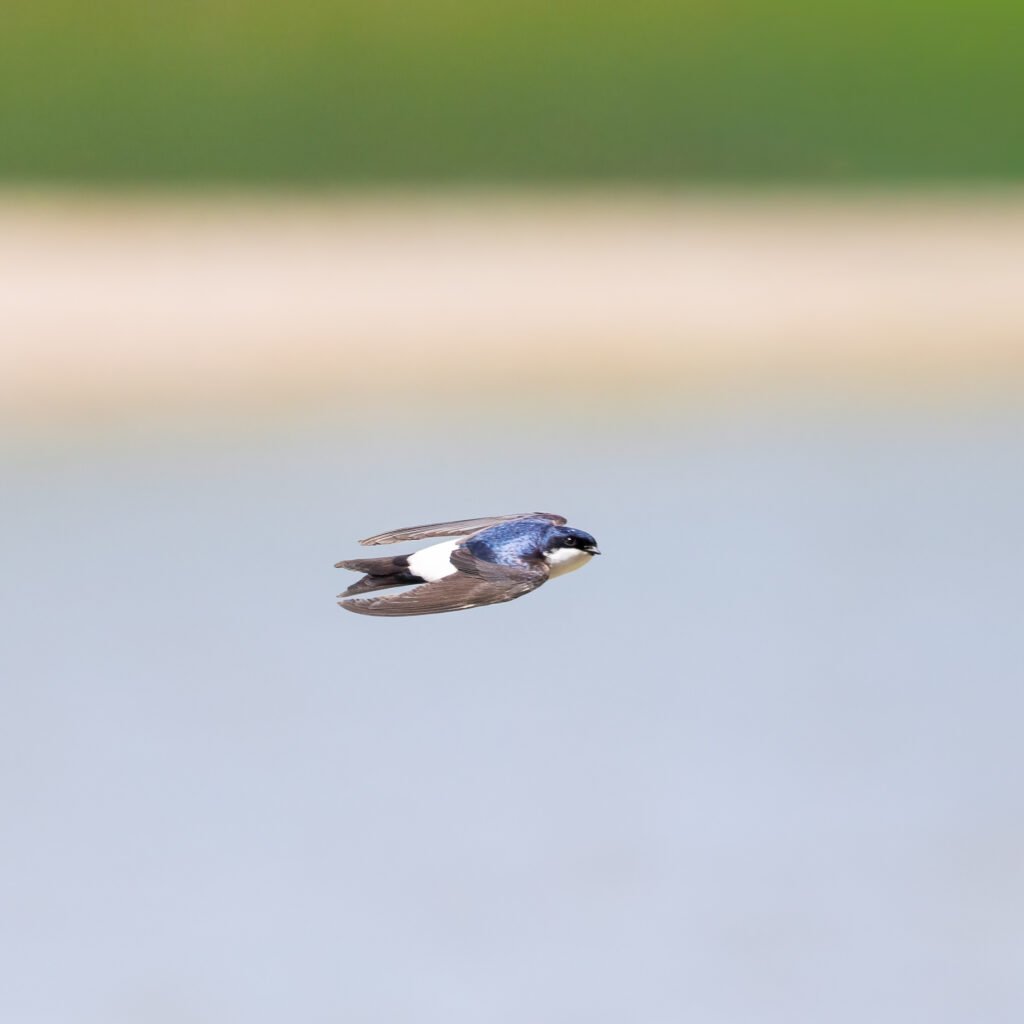
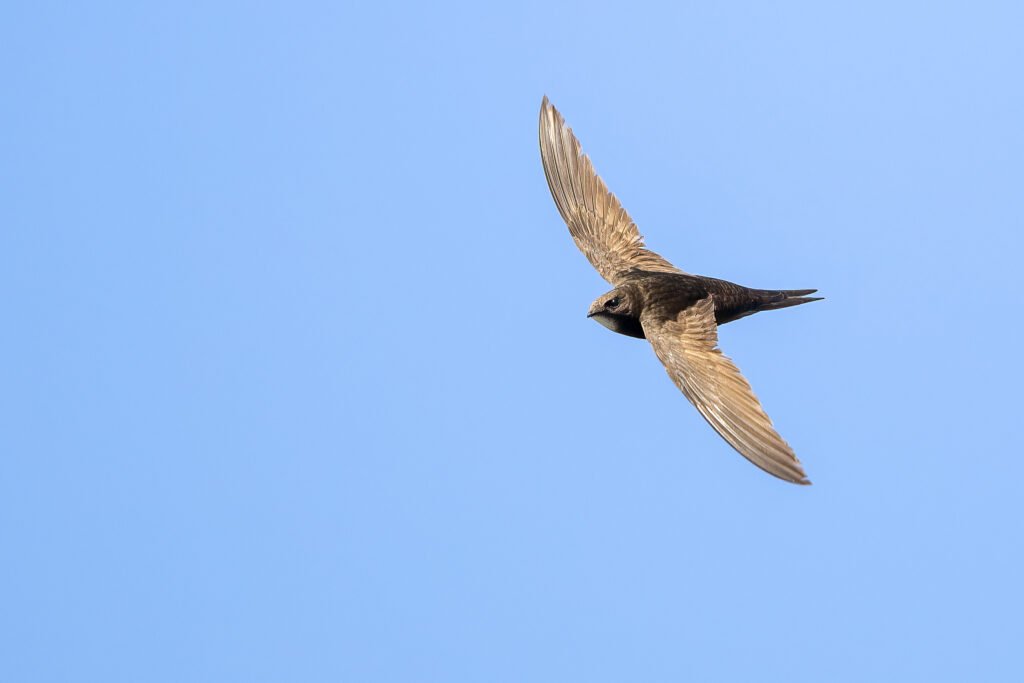
Photo: Steven Robinson
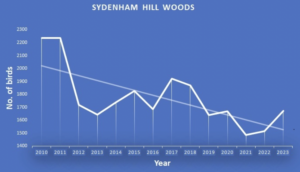
For twenty-plus years I have been counting birds in the Dulwich area, sometimes casually, sometimes methodically. For example, I have surveyed Sydenham Hill Woods, our most proximate Local Nature Reserve, for 17 years once a month systematically and undertaken a bi-annuaI count of Dulwich Park and a 20 year monthly count of Dulwich Park Lake.
At Sydenham Hill Woods there has been an average reduction in the number of birds of 24% between 2010 and 2023, across all species recorded. Between 2005 and 2025 Dulwich Park has seen a 25% reduction in the total number of birds.
From these figures, reader response two would also intimate a strong sense of denial. Denial that there is a biodiversity crisis, that nature is fine, and if there is a crisis, then it’s not shown locally– i.e.: `There are plenty of birds in my garden`. There may indeed be plenty of birds in your garden, but locally, nationally and worldwide their abundance has decreased. All the science and bird databases, and my own humble ones, would agree with this. Denial, fake news, and contra-conspiracy theories are an unfortunate products of our political and cultural times. Denial is also a way of hiding from our responsibilities to care for the environment. Your birds may be all right in your garden, but denial of a nature crisis is denying our children and future generations of a right to enjoy a bountiful environment.
The third reader response — concern without any meaningful behavior change — is also worrying me, as I have friends and neighbours who would certainly fit into this category of inertia. I fall into it myself, and have to shake myself out of it. Inertia is a terrible thing when facing any crisis. It is often a natural reaction to freeze, to stay busy with things that might matter less, to become numb and bury our heads away from not so comforting news. Particularly when we know that we are the root cause of the crisis.
There are numerous reasons for the decrease in the number of birds, often a combination of factors that are specific to each species. Yet there is a commonality. The common denominator, the overarching reason is us, is humankind. When confronted with another negative nature story I often turn the page quickly, sometimes I`ve had enough, sometimes I feel very tired, sometimes I become inert. The third response I can understand. But however difficult it maybe we need to dust ourselves down and face reality.
That`s why reader response four is heartening even if only a few of us may have ticked this box.
What Can We Do?
Yes we can ditch the car, not buy that bigger house, not have that extension, stop consuming so much, stop being so greedy. But realistically, there are also some other smaller and more achievable things that might make some differences locally.
There has been, since Covid, a soaring increase in pet ownership. There are now 13.5 million dogs in the UK up, from 8.3 million in 2011, whilst cats have increased to 11 million from 8 million in 2018. Both are bird predators. The cat is the greatest predator of our wild bird populations, whilst dogs, particularly when off leads, create disturbance which inhibits birds foraging. Limiting foraging time leads to death in inclement weather and inhibits successful rearing of chicks within the breeding season. Put a noisy bell on your cat, put a lead on your dog in any of our larger green areas, and obey the dogs on lead signs, particularly in Sydenham Hill Woods.
Be a bit more untidy in your yard or garden – insects need decaying leaves and sticks on the ground. Let your grass and flowers grow, and go to fruit and seed. Neatness lacks life in nature. Scrubbiness, on the other hand, is full of life. And it should go without saying to not even think of paving over or increasing the percentage of hard surfaces at your property or (yuk yuk yuk!) `planting` artificial grass.
Have a bit of a moan. Put pressure on authorities to do the same: not just to pay lip service to nature, but to take a firm stand against over-development, increase nature-friendly mowing regimes and implement less destructive landscape management, increase their wildflower and long grass areas. Remember scrub is not a negative pejorative — scrub is good.
And never never use chemicals, which destroy the soil biota and invertebrate life that birds depend on. Southwark Council now limit their pesticide and herbicide usage, but private landowners, allotment holders and even people with private gardens still use them. No wonder we are lacking insects, and birds are disappearing.
Join a green group and find out how you can help speak up for nature and increase bird habitat in your local area. Get into wildlife-friendly gardening, support your nearest park’s Friends group, and/or join SNAV.
Above all, share this information. This is real. It`s not meant as a negative diatribe, however upsetting it appears. This is meant to be a reality check. We are losing wild birds and we are losing them locally. Let`s do something about it.